Why AC leaks are a Stone Mountain summer loss
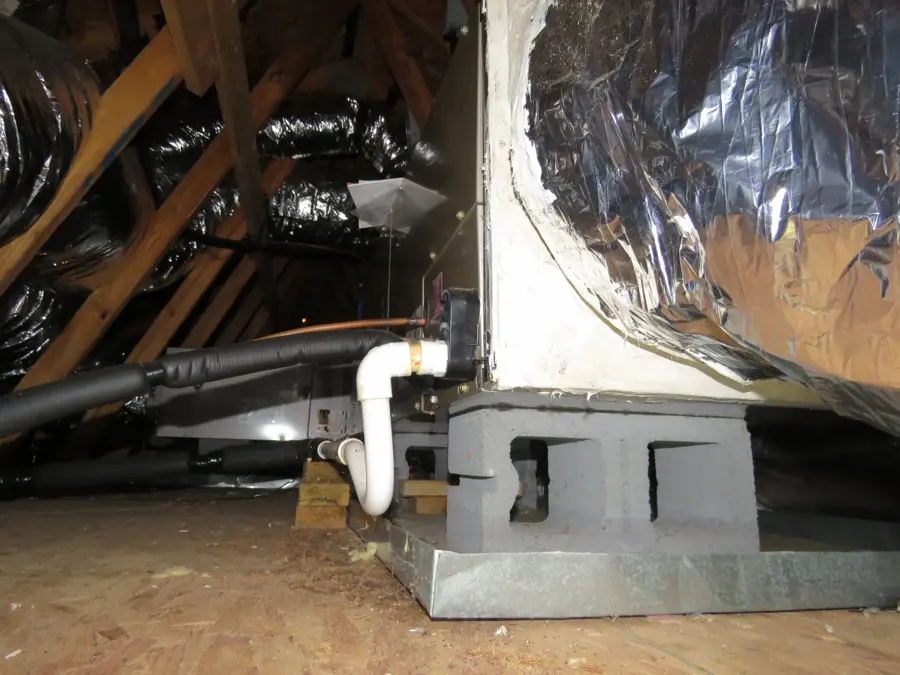
Stone Mountain summers are hot and humid, and an air conditioner running all day can pull a lot of water out of the air. That water drips off the evaporator coil into a pan and drains through a small PVC line to the outside or a plumbing drain. In many ranch and two-story homes around the mountain, the air handler sits in the attic, so when algae clogs the drain line or an old metal pan rusts through, the overflow lands on the ceiling drywall below. Air handlers in hall closets and crawl spaces cause the same problem at floor level.
- Drain lines clogged with algae and sludge
- Rusted secondary pans under older units
- Float switches missing or disconnected
- Disconnected drain fittings after other attic work
How the drying team handles it
The tech who does the walkthrough maps the wet area from the attic side and the room side with thermal imaging and meters. Soaked insulation around the unit comes out. Ceiling drywall that is sagging, stained through or wet for more than a day or two usually comes out too, because condensate that sat in a dirty pan picks up contamination. The drying team then dries joists, top plates and any wet wall cavities with air movers and LGR dehumidifiers and records daily readings. For leaks from bathrooms and supply lines above, see ceiling leak water damage.
A float switch in the secondary pan shuts the air conditioner off before the pan overflows. It is one of the cheapest water damage protections in a Georgia home.
Keeping the drain clear
An HVAC tech can clear the drain line, replace a rusted pan and add a float switch. Pouring a cup of white vinegar into the drain access every few months keeps algae down. The Department of Energy covers air conditioner maintenance, and EPA indoor air quality guidance explains why damp materials should be dried quickly. For the drying process see structural drying.