How roofs leak around Stone Mountain
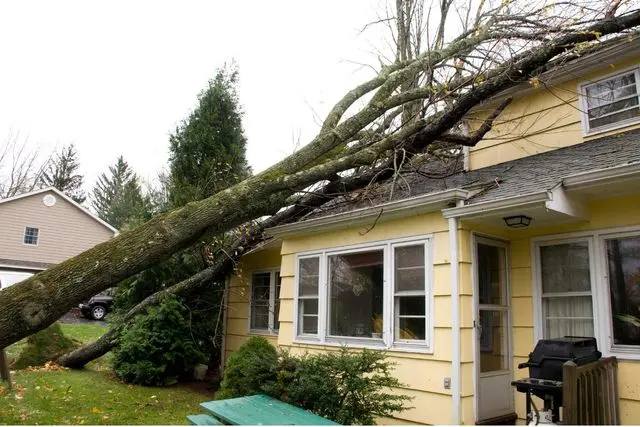
DeKalb County is full of tall loblolly pines and old oaks, and a summer thunderstorm or a tropical storm remnant brings a lot of them down on roofs. Wind lifts shingles on 20 and 30 year old roofs, and flashing around chimneys, skylights and plumbing vents fails with age. Water that gets through the roof soaks the attic insulation first, then the ceiling drywall below, then runs down inside exterior walls. For leaks that start inside the house, such as an upstairs bath, see ceiling leak water damage.
- Trees and limbs through the roof in wind storms
- Wind-lifted shingles and failed ridge caps
- Worn flashing at chimneys, walls and vents
- Clogged gutters backing water under the roof edge
What the drying team does in the attic and below
The tech who does the walkthrough maps moisture from the attic down, using thermal imaging to find wet ceilings and wall cavities that look fine. Soaked blown-in or batt insulation comes out, because it holds water against the ceiling drywall. The drying team dries decking and rafters with air movers and dehumidifiers, and dries ceilings in place where readings allow. Ceilings that sag or held water for days are removed. If debris or water sat long enough to contaminate materials, the extraction crew treats it as Category 3.
A sagging, water-filled ceiling can come down without warning. Keep people out of the room and let the pros drain it.
Roofer, adjuster and drying working together
The roofer or tree service handles the tarp and the roof repair; the restoration team handles everything wet inside. Wind and falling tree damage is often treated as a sudden loss, while long-term leaks from worn roofing may not be. Ready.gov severe weather tips cover preparing for storms, and the National Weather Service in Peachtree City posts severe thunderstorm warnings for DeKalb County. For the full drying process see structural drying.