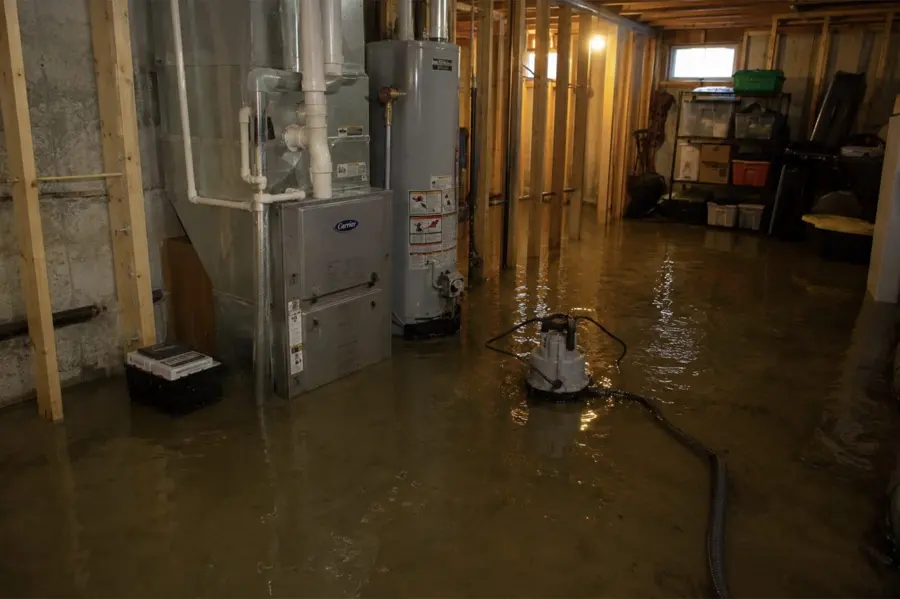
Why Stone Mountain basements take on water
The ground around the mountain is Georgia red clay, often thin over granite bedrock. Clay drains slowly and granite not at all, so during a heavy thunderstorm or a tropical storm remnant the water runs off hard and sits against the uphill basement wall instead of soaking away. Daylight basements built into slopes take that water on the uphill side and at the walk-out door on the downhill side. Inside, the lower level usually holds the water heater and laundry too, so plumbing losses end up there as well.
- Surface water against the uphill wall after a storm
- Water at walk-out doors and window wells
- Water heater and washer failures in the lower level
- Floor drain and sewer backups, covered on sewage backup cleanup
How a flooded basement is cleaned up
Deep water comes out with submersible pumps, then the extraction crew pulls the rest from carpet and slab. The tech who does the walkthrough maps moisture up the walls, because drywall wicks water well above the flood line. In finished basements, the lower two to four feet of drywall and the insulation behind it usually come out, carpet pad comes out, and framing is dried in place. Water from outside or a drain is Category 3, so everything porous it touched is removed and hard surfaces get an EPA-registered antimicrobial.
Basements dry slowly because they are cool and below grade. The drying team often adds desiccant dehumidifiers or heat to keep the moisture moving.
After the dry-out
Regrading, extended downspouts, a cleared French drain or a sump system keep storm water out next time. FloodSmart.gov explains how flood insurance treats basements, which is narrower than most people expect, and Ready.gov covers basement flood safety. For drying details see structural drying, and for storm water see storm flood cleanup.