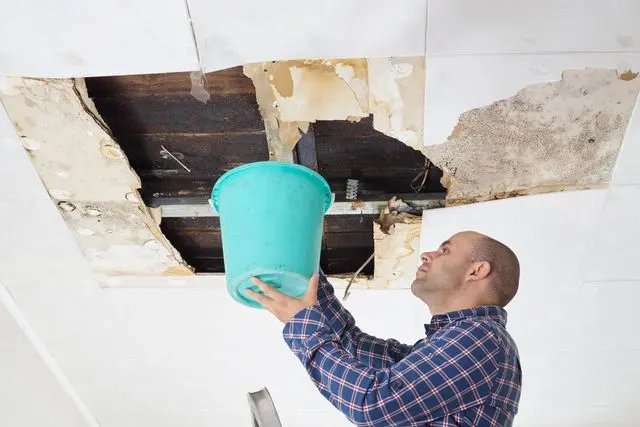
Where ceiling leaks start in Stone Mountain homes
Two-story colonials, split-levels and split-foyers stack bathrooms and laundry rooms over living space, so a failed toilet supply, a cracked tub drain or a worn shower pan shows up as a stain on the ceiling below. In homes plumbed with polybutylene, a fitting failure in the floor system is a frequent cause. In summer, an attic air handler overflowing its pan is another; see AC condensate leak water damage. Leaks that come through the roof have their own page: roof leak water damage.
- Toilet supply lines and wax rings upstairs
- Tub and shower drains and failed shower pans
- Supply fittings inside the floor system
- Upstairs laundry and ice-maker lines
How a ceiling leak is dried out
The tech who does the walkthrough uses thermal imaging and meters to map the wet area, which is almost always bigger than the stain. Insulation above a ceiling holds water, and joists and subfloor above soak it up. Where the ceiling is sound and readings allow, the drying team dries it in place with air movers and dehumidifiers, sometimes through small access holes. Sagging drywall, ceilings that held water for days, and any ceiling wet with toilet or drain water come out.
Water near a light fixture or a ceiling fan is an electrical hazard. Turn that circuit off before anyone touches the ceiling.
Finding the real source
Water runs along joists before it drips, so the stain may sit several feet from the leak. A plumber repairs the source; the restoration team dries everything it wet. The EPA WaterSense leak checklist helps find slow leaks early, and the Consumer Product Safety Commission tracks recalls on supply lines and fixtures. For the drying process see structural drying.