Where appliance leaks come from
Rubber washing machine hoses crack with age, dishwasher supply lines and door seals fail, and the thin plastic line that feeds a refrigerator ice maker splits or pops off its fitting when the fridge is moved. Upstairs laundry rooms in newer two-story Stone Mountain homes turn a washer leak into a ceiling leak as well. Because the water runs behind and under the appliance, it often spreads under cabinets, laminate and hardwood for days before anyone notices.
- Rubber washer hoses past about five years
- Dishwasher supply lines and drain hoses
- Plastic ice-maker and water dispenser lines
- Failed drain pans under upstairs washers
How kitchens and laundry rooms are dried
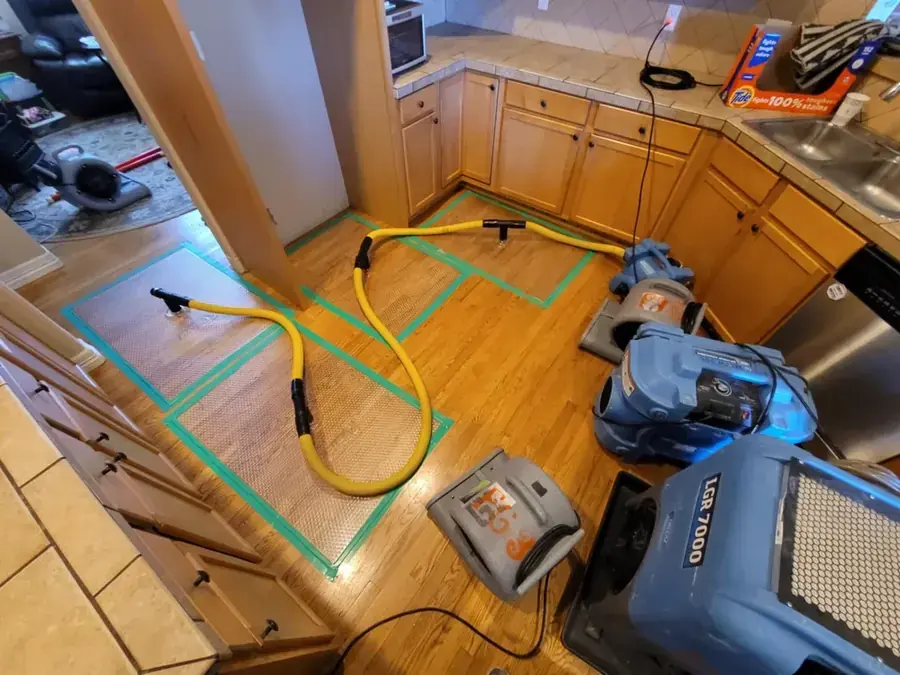
The extraction crew pulls standing water, then the tech who does the walkthrough maps moisture under the cabinets and flooring with meters and thermal imaging. The drying team removes toe-kick panels and drills small holes in cabinet bases to push dry air into the voids, uses floor drying mats to pull water out of hardwood, and runs LGR dehumidifiers. Laminate over a wet subfloor usually comes up, because it traps the water. Washer drain water is Category 2, so materials it soaked are handled more carefully.
Braided stainless washer hoses and a leak sensor with an automatic shutoff valve prevent most appliance floods for a small cost.
Recalls and prevention
The Consumer Product Safety Commission lists recalls on appliance supply lines and fittings, and the EPA WaterSense leak checklist covers checking appliance connections. For hardwood and subfloor drying see structural drying, and for fast water removal see water extraction.