Why sewage backs up in Stone Mountain homes
Many homes around the mountain are 30 to 60 years old, with clay or cast iron sewer laterals that tree roots have found their way into. Pines and oaks planted when the subdivisions went in are now big enough to crack and clog those lines. Grease, wipes and heavy rain that overloads the public sewer add to it. Because a lot of Stone Mountain houses have a lower level or basement, the lowest drain, often a floor drain, a basement shower or a downstairs toilet, is where the sewage comes back up.
- Tree roots in older clay and cast iron laterals
- Grease and wipes clogging the main line
- Heavy rain overloading the public sewer
- Failed septic systems on some older lots
The Category 3 protocol
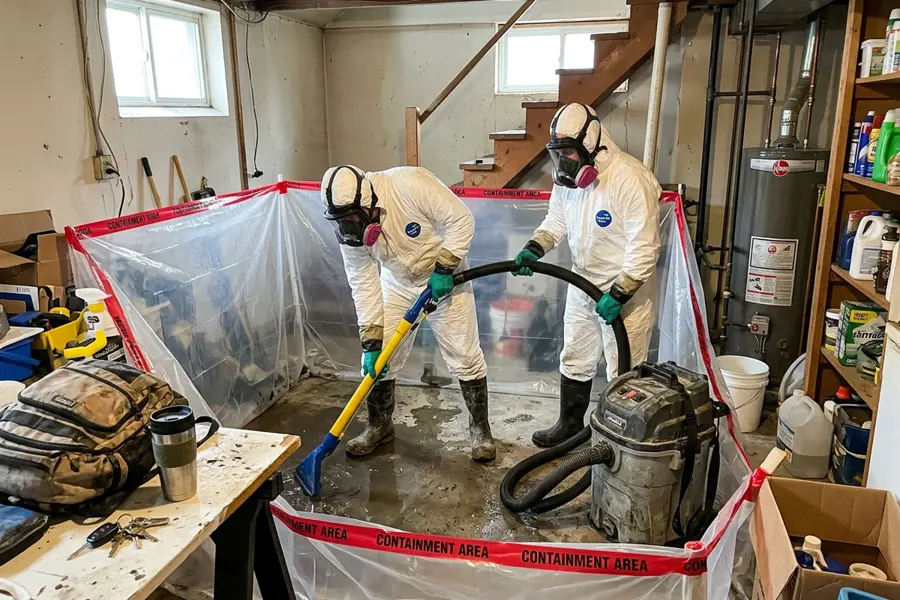
Sewage is Category 3 the moment it happens, so the work follows a strict order. The crew wears suits, gloves, boots and respirators and sets up plastic containment with HEPA air scrubbers so contamination does not spread. The extraction crew removes the sewage, and porous materials it touched, such as carpet, pad, the lower drywall and insulation, are removed and bagged, not dried. Hard surfaces and framing are cleaned and an EPA-registered antimicrobial is applied at its label dwell time. Only then does the drying team set air movers and dehumidifiers for structural drying.
Do not use bleach and a mop on sewage. It spreads contamination into grout and subfloor and puts you in contact with the water.
Health, plumbing and coverage
OSHA publishes protective equipment guidance for sewage exposure, and DeKalb County handles problems on the public side of the sewer. A plumber clears or repairs the private lateral. Many homeowners policies need a separate water backup endorsement to cover sewage cleanup, so it is worth checking with your own insurer. For basements see basement flooding cleanup, and for crawl spaces see crawl space water removal.