Why polybutylene is a Stone Mountain problem
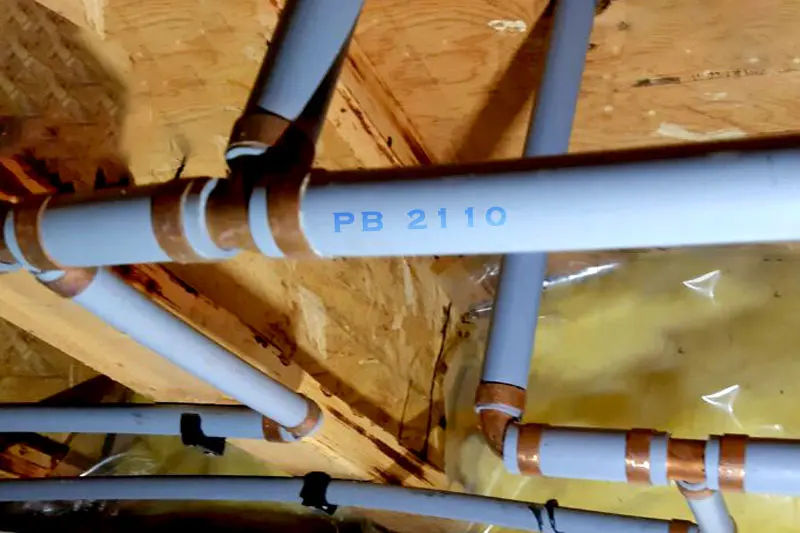
Polybutylene was a cheap, flexible gray plastic supply pipe installed across the Sun Belt from roughly 1978 to 1995, and the subdivisions that filled in around Stone Mountain, Redan and Smoke Rise in those years used plenty of it. Over time, chlorine in treated water attacks the pipe and its acetal or brass fittings from the inside. The pipe looks fine on the outside right up until a fitting cracks or the wall splits, and because it is under pressure, the leak does not wait for anyone to be home.
- Gray pipe stamped PB2110, usually half inch or three quarter inch
- Failures at crimp fittings, at the water heater and under sinks
- Blue polybutylene sometimes runs as the service line from the street
- Leaks in crawl spaces that go unnoticed for weeks
How the cleanup is handled
The tech who does the walkthrough traces where the water went with thermal imaging and pinless meters, because a pressurized leak inside a wall or ceiling spreads along framing. The extraction crew pulls standing water, and the drying team dries cavities through small access holes where possible. Wet ceiling insulation usually comes out. In a crawl space the drying team extracts pooled water from the vapor barrier and dries the subfloor and joists from below; see crawl space water removal.
Not sure what pipe you have? The polybutylene pipe risk check walks through build year, pipe color and fittings in under a minute.
Repiping and the claim
The water damage from a sudden polybutylene failure is often treated like any other sudden supply line leak, while the cost of replacing the pipe itself usually is not. Repiping is plumbing work, and many owners use a failure as the moment to replace the whole system with PEX or copper. The EPA WaterSense leak checklist helps catch slow drips at fittings, and UGA Extension publishes home water quality and plumbing material information for Georgia households. For drying details see structural drying.