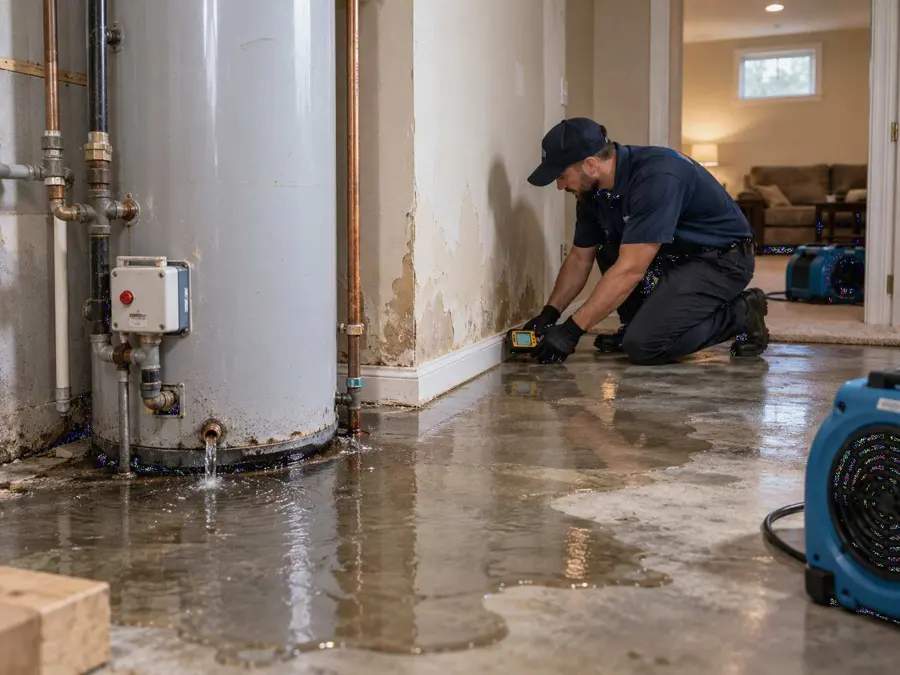
Why water heaters fail in Stone Mountain homes
A tank water heater usually lasts about 8 to 12 years. Sediment settles in the bottom, the steel corrodes from the inside once the anode rod is used up, and eventually the tank seam or the drain valve lets go. In Stone Mountain, tanks sit in lower-level utility rooms of split-levels and daylight basements, in garages on ranch homes and sometimes in attic or hall closets in newer two-story houses. A tank in a closet or attic can put water into the ceiling and walls below.
- Corroded tank seams on older units
- Leaking drain valves and relief valve lines
- Failed supply connectors on top of the tank
- Overflowing drain pans with no drain line
How the cleanup is done
The extraction crew pulls the water from the floor, including carpet and pad in finished areas. The tech who does the walkthrough maps how far it wicked into drywall, baseboard and the floor system. Clean tank water caught early is usually dried in place; carpet pad and the lower drywall often come out if the water sat. If the tank was above living space, ceilings and subfloor below get the same treatment as a ceiling leak. Lower-level losses are covered on basement flooding cleanup.
Check the label on the tank. The manufacture date is usually coded in the serial number, and a tank past 10 years is worth watching.
Preventing the next leak
A drain pan piped to a drain, a leak sensor that shuts the water off, and flushing the tank once a year extend its life. The Department of Energy water heating page covers maintenance and replacement options, and the Consumer Product Safety Commission lists water heater recalls. For the full drying process see structural drying.